THE ADVENTURE COLLECTIVE® · Independent discovery and booking for outdoor travel

Spend a rich day moving through Cappadocia’s carved castles, frescoed cave churches, whimsical valleys, pottery workshops and underground cities. This guided full-day tour offers short hikes, cultural stops and practical logistics to see the region’s highlights in eight hours.
Spend a rich day moving through Cappadocia’s carved castles, frescoed cave churches, whimsical valleys, pottery workshops and underground cities. This guided full-day tour offers short hikes, cultural stops and practical logistics to see the region’s highlights in eight hours.
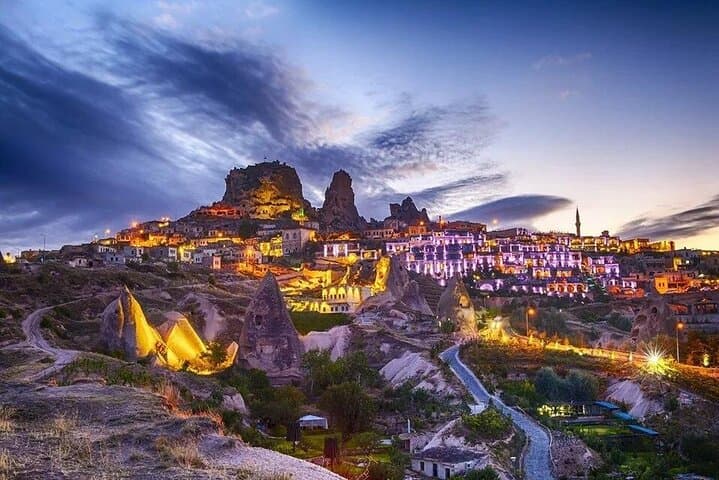
You step out of the minivan and the air feels thin and clean — Cappadocia sits at roughly 1,000 meters, and the plateau opens like a sculpted map. Soft volcanic tuff rises into towers and chimneys, light and shadow carving faces into the rock. Your guide points to Uçhisar ahead: a hulking rock castle with threaded stairways that pull you up into a tabletop panorama where the region’s patchwork of valleys reads like a geological diary.
Verified experiences and guided adventures in the surrounding area.
Operated by CAPDEST TRAVEL · Göreme, Nevşehir Province
You step out of the minivan and the air feels thin and clean — Cappadocia sits at roughly 1,000 meters, and the plateau opens like a sculpted map. Soft volcanic tuff rises into towers and chimneys, light and shadow carving faces into the rock. Your guide points to Uçhisar ahead: a hulking rock castle with threaded stairways that pull you up into a tabletop panorama where the region’s patchwork of valleys reads like a geological diary.
This full-day circuit moves at a deliberate pace: short hikes, photo stops, a hands-on pottery demo, and a descent into an underground city. The route knots together the classics — Uçhisar Castle, Göreme Open Air Museum, Love Valley, Devrent (Imagination) Valley, Avanos on the Kızılırmak, and a subterranean settlement such as Kaymaklı or Özkonak — into an eight-hour loop that balances driving with walkable exploration. Expect museum stops of 60–90 minutes and two or three 15–45 minute photo or demo pauses.
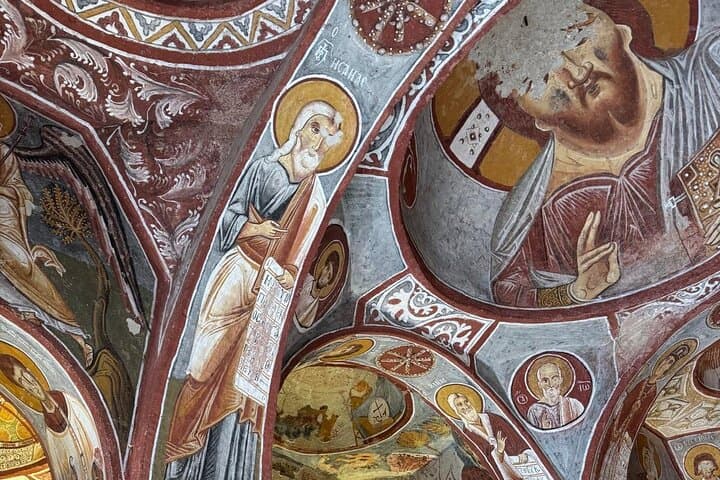
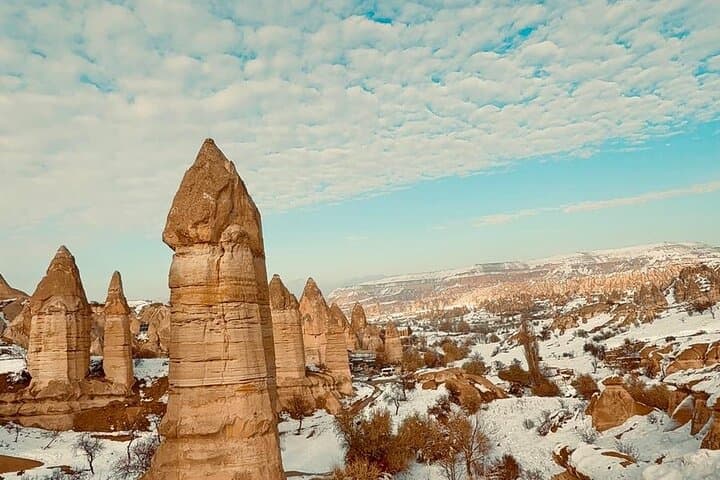
Geology explains the scenery: millennia of volcanic ash compacted into tuff, later carved by wind and water into the fairy chimneys you see now. Historically, the soft rock allowed early Christians to carve churches and frescoed chapels — the Göreme Open Air Museum still preserves Byzantine murals that survive where stone shelters stable humidity. Avanos carries an older thread: potters have worked the Red River clay here since the Hittites, and a short workshop shows you how those forms are still turned by hand.
Locally, craft and tourism overlap in practical ways. Guides will help with ticket purchases — the Open Air Museum fee is around 20 EUR, underground city entry roughly 6 EUR — and most operators include hotel pickup and drop-off using recent-model vehicles. The terrain is mostly easy: paved lanes, short stair climbs, and narrow tunnels (in the underground city) that require bending and steady footing. Bring sensible shoes; the most stirring viewpoints demand 10–30 minutes of uphill walking.
Practical advice: start early to avoid the midday heat and to see balloon fleets if you time a sunrise. Hydrate — the plateau is dry — and carry layers; mornings are cool and afternoons warm, especially in spring and autumn. If you plan to enter underground passages, know that they can be tight and cool; those with claustrophobia or mobility issues should plan accordingly.
This is a day for curiosity more than endurance: photograph porous rock faces and chipped frescoes, shop for pottery in Avanos, and listen to a guide stitch geology to human story. The route compacts Cappadocia’s scale and history into a single, accessible loop — a primer on why this strange volcanic landscape has shaped lives, faiths, and crafts for millennia.
easy.
8 hours.
Suitable for travelers in normal physical condition; includes multiple short uphill walks and low tunnels.
The tour lasts about eight hours, with hotel pickup and drop-off included for most central Göreme accommodations.
Open Air Museum and underground city fees are typically not included; guides usually assist with on-site ticket purchases (museum ~20 EUR, underground city ~6 EUR).
Yes; the itinerary is low-impact, but underground city passages and stair climbs may be difficult for visitors with mobility issues or severe claustrophobia.
Vehicles and some pickup points are accessible, but several sites have stairs and narrow passages that limit wheelchair access.
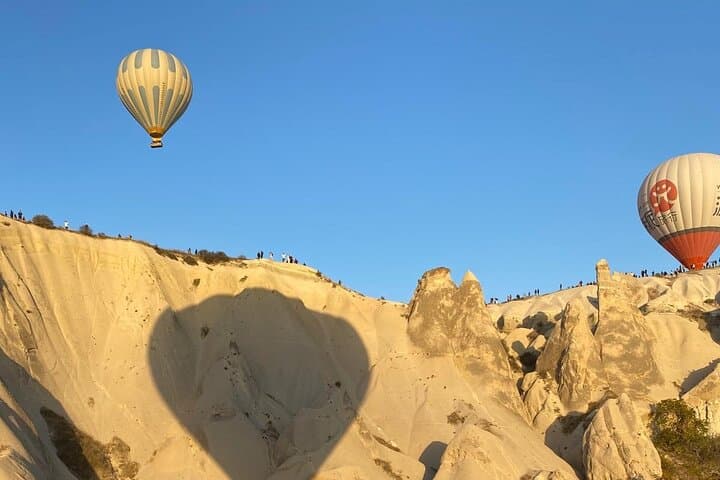
Balloon flights are weather-dependent and happen at sunrise; the tour itself does not include a balloon ride but you can often view balloons from Uçhisar or surrounding ridges.
This operator offers multilingual guides; confirm your preferred language when booking.
Cappadocia’s carved settlements date back to Hittite times and were later expanded by early Christians who hollowed churches and frescoed cave interiors during Byzantine periods.
The region’s soft tuff erodes readily, so stick to trails and support local craft workshops that practice sustainable pottery techniques.
CAPDEST TRAVEL operates guided outdoor trips and adventures with an emphasis on safety, stewardship, and memorable experiences.
You step out of the minivan and the air feels thin and clean — Cappadocia sits at roughly 1,000 meters, and the plateau opens like a sculpted map. Soft volcanic tuff rises into towers and chimneys, light and shadow carving faces into the rock. Your guide points to Uçhisar ahead: a hulking rock castle with threaded stairways that pull you up into a tabletop panorama where the region’s patchwork of valleys reads like a geological diary.
You step out of the minivan and the air feels thin and clean — Cappadocia sits at roughly 1,000 meters, and the plateau opens like a sculpted map. Soft volcanic tuff rises into towers and chimneys, light and shadow carving faces into the rock. Your guide points to Uçhisar ahead: a hulking rock castle with threaded stairways that pull you up into a tabletop panorama where the region’s patchwork of valleys reads like a geological diary.
This full-day circuit moves at a deliberate pace: short hikes, photo stops, a hands-on pottery demo, and a descent into an underground city. The route knots together the classics — Uçhisar Castle, Göreme Open Air Museum, Love Valley, Devrent (Imagination) Valley, Avanos on the Kızılırmak, and a subterranean settlement such as Kaymaklı or Özkonak — into an eight-hour loop that balances driving with walkable exploration. Expect museum stops of 60–90 minutes and two or three 15–45 minute photo or demo pauses.
Geology explains the scenery: millennia of volcanic ash compacted into tuff, later carved by wind and water into the fairy chimneys you see now. Historically, the soft rock allowed early Christians to carve churches and frescoed chapels — the Göreme Open Air Museum still preserves Byzantine murals that survive where stone shelters stable humidity. Avanos carries an older thread: potters have worked the Red River clay here since the Hittites, and a short workshop shows you how those forms are still turned by hand.
Locally, craft and tourism overlap in practical ways. Guides will help with ticket purchases — the Open Air Museum fee is around 20 EUR, underground city entry roughly 6 EUR — and most operators include hotel pickup and drop-off using recent-model vehicles. The terrain is mostly easy: paved lanes, short stair climbs, and narrow tunnels (in the underground city) that require bending and steady footing. Bring sensible shoes; the most stirring viewpoints demand 10–30 minutes of uphill walking.
Practical advice: start early to avoid the midday heat and to see balloon fleets if you time a sunrise. Hydrate — the plateau is dry — and carry layers; mornings are cool and afternoons warm, especially in spring and autumn. If you plan to enter underground passages, know that they can be tight and cool; those with claustrophobia or mobility issues should plan accordingly.
This is a day for curiosity more than endurance: photograph porous rock faces and chipped frescoes, shop for pottery in Avanos, and listen to a guide stitch geology to human story. The route compacts Cappadocia’s scale and history into a single, accessible loop — a primer on why this strange volcanic landscape has shaped lives, faiths, and crafts for millennia.